The short answer
Fall and winter are the easiest time to replace windows in Phoenix. From November through February, Sky Harbor's average highs stay between 66 and 77 degrees, so an open wall costs little cooling. Shop in October or November and install by March, before the heat and ahead of SRP's April 30, 2027 rebate deadline.
Why is fall and winter the best time to replace windows in Phoenix?
Because the weather is on your side for six months. The National Weather Service's Phoenix climate summaries list these 1991 to 2020 average highs at Sky Harbor:
| Month | Average high at Sky Harbor (°F) |
|---|---|
| October | 89.2 |
| November | 76.5 |
| December | 66.2 |
| January | 67.6 |
| February | 70.8 |
| March | 78.1 |
| July | 106.5 |
During an install, each opening sits empty for a while between pulling the old window and setting the new one. In January that's a little fresh air. In July it's your air conditioning running straight out the wall, and a crew working in 106 degrees.
The bigger reason is what the windows do once they're in. ENERGY STAR's 2025 windows guide says windows make up about 8% of a home's outside surface but account for about 45% of its heat gain or loss. Windows installed in January are already blocking heat on the first 100-degree day of the year. Put them in during August and you've paid most of a summer's power bills with the old glass. And in the fall you have time to compare quotes and choose the glass for each side of the house, instead of signing whatever gets you on the schedule fastest because the back bedroom won't cool down.
How far ahead should you plan a window replacement?
Start about two to four months before you want the windows in. Replacement windows aren't sitting on a shelf. Each one is built to order for its opening, so there's always a wait between saying yes and install day. Pella's replacement window page says it typically takes 6 to 8 weeks to build the windows and doors for a home, and other makers run on their own schedules, so ask for the lead time with your quote.
A typical project runs in this order:
- A free estimate, where each opening is measured.
- Choosing the windows, frame color and glass.
- HOA approval, if you have an HOA.
- Ordering, then the wait while the windows are built.
- Install day.
Started in October or November, those steps finish comfortably before it gets hot. Started in June, the same steps run straight into the hottest months, and the install lands in July or August. If you're still comparing prices, our window replacement cost guide has Phoenix's published price ranges and a checklist for comparing two quotes, and our window replacement service page shows the steps of a typical job.
Leave time for HOA approval
If your home is in an HOA, this is the step people forget to plan for. Many HOAs have rules on exterior frame color and grid patterns, and approval goes through a committee that meets on its own schedule. Arizona law for planned communities (A.R.S. 33-1817) says that committee has to be chaired by a member of the board, and that approval of architectural plans can't be unreasonably withheld. It doesn't set a deadline, so how long it takes depends on your HOA's own rules.
The easiest way to handle it:
- Ask for the architectural rules in the fall, before you choose anything.
- Find out what the request needs, usually the frame color, the grid pattern and a picture or spec sheet.
- Send the request as soon as you've picked your windows, and order once it's approved.
It's a lot easier to get a color approved up front than to explain one after it's installed.
Plan around the SRP rebate deadline
If SRP is your electric company, its window replacement rebate pays $3 per square foot on qualifying windows. As SRP publishes it in October 2026, the windows have to be installed before April 30, 2027, and you have to apply within six months of the install date.
Three things to know when you're timing the job:
- The rules on your install date are the ones that count. SRP's terms say you get the rules and rebate levels in effect on the date of installation, and that the program can change or end without notice. A winter install gets you in well ahead of the deadline.
- The windows have to meet SRP's numbers. ENERGY STAR rated, a U-factor of 0.32 or lower and a Solar Heat Gain Coefficient of 0.23 or lower, installed by a licensed Arizona contractor, in a home that has had SRP service for more than a year.
- Sliding glass doors can count too, if they're at least 80% glass. We covered that in our sliding glass door guide.
Finish full-frame work before monsoon season
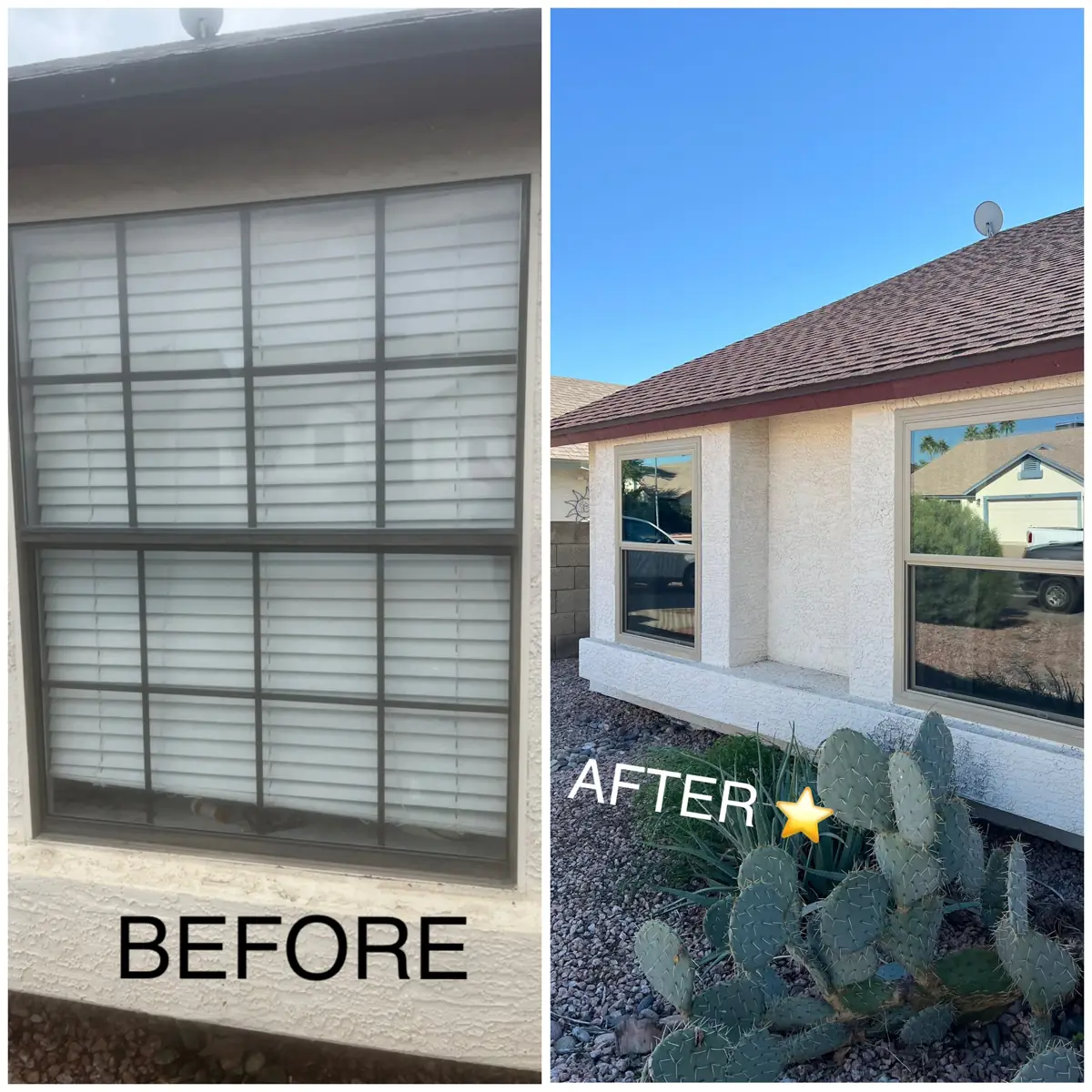
Arizona's monsoon season officially runs from June 15 to September 30, and Phoenix usually sees its first storms in the first week of July, climate expert Randy Cerveny told KTAR in 2024. Most windows don't care about the calendar once they're sealed in. Full-frame jobs are different. On a full-frame install the old frame comes out completely, the stucco around the window is cut back, and then it's patched, textured and painted. You want that patch done, cured and painted well before the first storm pushes water against the wall.
A retrofit window doesn't open up the stucco at all, so this matters less if every window in your house is a retrofit. Our guide to replacing aluminum windows in a stucco home explains how to tell which method each window needs. If any of yours need full frame, a winter install gives the stucco months to settle before the storms, instead of weeks.
Can you replace windows in the summer?
Yes. Windows go in all year here, and if one is cracked, leaking or won't lock, don't wait until October to deal with it. The point of planning ahead isn't that summer installs don't work. It's that you get to choose the timing instead of the heat choosing it for you.
If the budget won't cover the whole house this winter, split it. Start with the windows that take the most direct sun, which in most Phoenix homes means the west and south sides, since those are the ones heating the house every afternoon. Do the rest the following winter. Each phase can get the SRP rebate on its own, because SRP says its rebate isn't limited to whole-house jobs and can be claimed as windows are replaced, as long as the program is still running. Just remember that windows bought in small batches usually cost a bit more each, since the crew sets up more than once.
A month-by-month plan for this winter
| When | What to do |
|---|---|
| October and November | Get estimates, choose your windows and glass, ask your HOA for its rules |
| November and December | Send the HOA request, then order once it's approved |
| January through March | Install, while average highs are in the 60s and 70s |
| Before April 30, 2027 | Last day for SRP's current rebate terms, as published |
| Within 6 months of install | Send in your SRP rebate application |
That plan has slack built in. If your HOA is slow or your windows take longer to build, a March install still beats the heat and the rebate deadline. If you'd like to get on a winter schedule, our Tempe window replacement and Gilbert pages list the parts of the Valley we cover, and you can book a free estimate any time.
More questions people ask
How long does install day take?
HomeGuide puts a single-hung window under 10 square feet at 30 to 60 minutes to replace, and a large bay or bow window at up to a full day. A whole house depends on the number of windows and whether any are full frame, so ask for the schedule with your quote.
Do I need a permit to replace windows in Phoenix?
Not usually, if each new window goes into the same size opening. Changing the size of an opening needs a permit. Our window replacement cost guide links the city's own rules, including the one for bedroom escape windows.
What if a window cracks or fogs before the new ones arrive?
Don't wait for the season. A cracked pane or a failed seal can often be fixed on its own, and our repair or replace guide covers what that costs and when a repair is the better call.
About Honest View Windows
Honest View Windows replaces windows and sliding glass doors in homes across the Phoenix area. The company is owned by Scott Harris, and it's licensed and insured in Arizona (ROC 354809). Estimates are free. More about us or call (480) 550-1195.