The short answer
Old aluminum windows in a stucco wall can usually be replaced with a retrofit window: its wide outer fin covers the old frame, so the stucco and drywall stay untouched. A full-frame install, which cuts back and patches the stucco, costs more and is better when water has gotten in or the opening changes size.
Why Phoenix homeowners replace aluminum windows
Aluminum frames pass heat straight through. In Angi's Phoenix cost guide, aluminum is the cheapest frame, and its listed downside is that it absorbs heat and moves it into your home. Andersen's guide to replacing windows in a stucco home says the same about the aluminum frames common on stucco houses: they conduct a lot of heat, which is a real problem in warm climates. ENERGY STAR notes that aluminum frames are usually built with a thermal break, an insulating strip inside the metal, to slow that down.
Many older Valley homes still have their first aluminum windows, often with a single pane of glass. They're behind a lot of everyday complaints: a west room that never cools down, frames too hot to touch in the afternoon, sliders that grind in a sandy track, and fog between the panes on the dual-pane ones.
New vinyl or fiberglass windows with dual-pane Low-E glass deal with the frame and the glass at the same time. The bigger question on a stucco home is how the new window goes in, because that decides how much of the wall gets disturbed and a good part of the price.
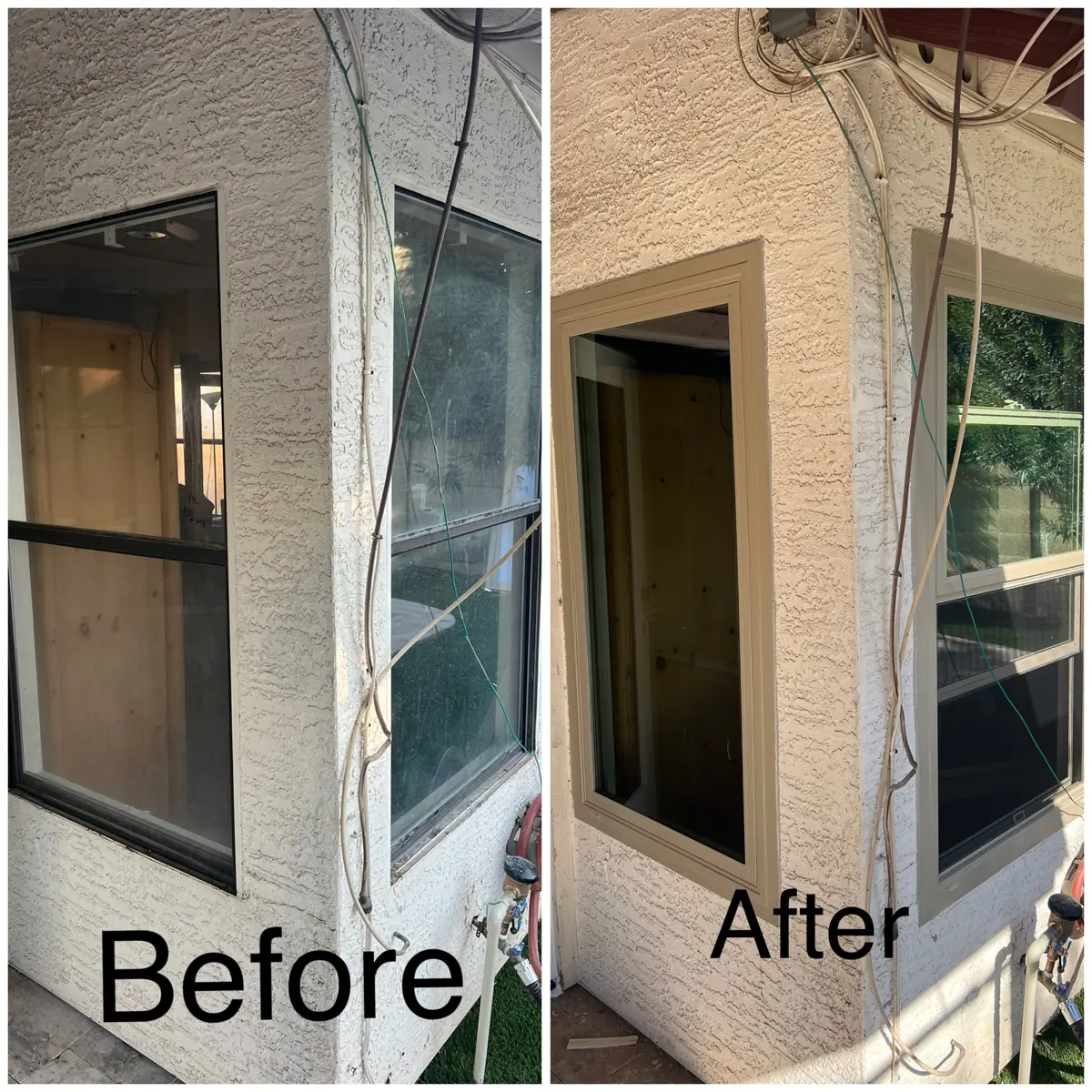
How a retrofit window goes into a stucco wall
A retrofit window, also called a flush fin, stucco flange or jump frame window, is built to fit inside the opening you already have. Milgard's guide to replacement and new construction windows says this style is typically used where aluminum windows are in place and the outside wall is stucco or masonry, and that its large outer flange is made to hide the old window's frame.
Andersen's stucco guide lays out the steps, which look like this:
- Take out the old glass panels (the sashes) and clean up the old frame.
- Dry-fit the new window and trim the fin if it needs it.
- Set shims on the sill and run sealant on the old frame, leaving gaps so water can drain out.
- Set the new window, check that it's plumb, level and square, and fasten it.
- Seal the gap inside and add the trim, then seal the outside edge, again leaving drain gaps at the bottom.
The stucco isn't cut, the drywall isn't touched, and there's nothing to patch or paint. That's why retrofit costs less and goes faster. It also means the old aluminum frame stays in the wall, covered by the new fin, so it only works when that frame is straight, solid and dry.
How a full-frame replacement works
A full-frame install takes everything out, down to the wood framing of the wall. Milgard calls these new construction windows: they have a nailing fin that's nailed straight to the studs, which is how windows go into a new house. Using one on an existing home means removing the outside wall covering around the window so the studs are exposed, which Milgard describes as the more involved job.
On a Phoenix stucco house, that looks like this:
- The stucco is cut back around the window.
- The old frame comes out completely.
- The framing gets checked, and any rotted or soft wood is repaired.
- The new window is nailed in and flashed with tape and paper so water runs out instead of in.
- The stucco is patched, textured to match and painted.
The extra work buys you two things. First, you get to see and fix what's behind the old frame. HomeAdvisor's window replacement guide points out that full frame lets the installer inspect and repair water damage. Second, you can change the opening, for example making a small bathroom window bigger, or switching a slider to a single-hung window of a different size. Changing the size needs a permit, which our window replacement cost guide covers along with the city's other rules.
What makes a retrofit window leak, and how to avoid it
Retrofit windows themselves rarely cause leaks. The way they're put in does. Gene Summy, a building inspector whose company investigates water problems in walls, wrote in the Journal of Light Construction that his firm has looked at hundreds of leaking retrofit installs, and in every case the cause was an installer who didn't know how to put the window in correctly, not the window.
His advice, in plain terms:
- Find out where an old leak is coming from first. If water is getting in through the flashing around the old frame rather than through the window itself, it will keep leaking after a retrofit. Only a full-frame install, with the stucco opened and new flashing put in, fixes that.
- Measure carefully. He measures each opening in three places across and three places up and down, uses the smallest of each, and leaves a small gap all around for the new window. Replacement windows can be ordered in eighth-of-an-inch steps, so there's no reason to force one in.
- Never cut the old frame out to make a too-big window fit. Doing that tears the old flashing behind the stucco, and he's seen those jobs leak as badly as an open window. The fix for a wrong size is a new, correctly sized window.
He also notes that windows certified by AAMA, an industry testing group, are tested for water, air and wind resistance, so ask whether the windows on your quote are AAMA certified. And as Andersen's install steps above show, the sealant at the bottom of the window needs gaps left in it, so water that gets behind the fin can drain back out.
Retrofit vs full frame cost
Full frame costs more because the labor and the stucco work add up. These are published ranges, not quotes:
| Cost | Retrofit | Full frame |
|---|---|---|
| Installation labor per window (HomeAdvisor, 2026) | $100 to $300 | $150 to $800 |
| Stucco patching (HomeGuide, small repairs) | None | $200 to $800 per patch, or $8 to $50 a square foot |
| Permit, if the opening changes size (HomeAdvisor) | Not needed | $50 to $300 |
| Rotted wood found in the opening (Angi, Phoenix dry rot repair) | Not opened up | $155 to $830 if found |
For ten windows, HomeAdvisor's labor ranges come to $1,000 to $3,000 for retrofit and $1,500 to $8,000 for full frame, before the stucco work. The window itself costs about the same either way, since the price difference comes from the work around it. HomeGuide's stucco repair guide puts small stucco repairs at $200 to $800, and matching the texture and paint color is what takes the skill.
That's why two quotes for the same house can be thousands of dollars apart. If one company quotes retrofit and another quotes full frame, they aren't pricing the same job. Ask each one which method it's using, and why, before you compare the totals. Our window replacement service page walks through what a typical job looks like.
Which method does your house need?
Most of the time the old frame tells you. A retrofit makes sense when:
- The window is staying the same size.
- The old aluminum frame is straight and solid, with no bends or corrosion through the metal.
- There are no water stains on the wall, sill or floor under the window.
- The stucco around the window is sound, without cracks running out from the corners that let water in.
Full frame is the better choice when:
- Water has been getting in. Stains, bubbling paint, a soft sill or a musty smell under a window all point to water behind the frame, and a retrofit would cover it up.
- The frame is bent or damaged enough that the new window can't sit square and seal against it.
- You want to change the size or style of the opening.
- A bedroom window is too small to climb out of. The City of Phoenix's emergency escape window guideline says a replacement can't leave the home less safe than it was, and that an enlarged opening has to meet today's code.
One house can have both. You can retrofit most of the windows and do full frame only on the one with a water problem, so you only pay for stucco work where it's needed.
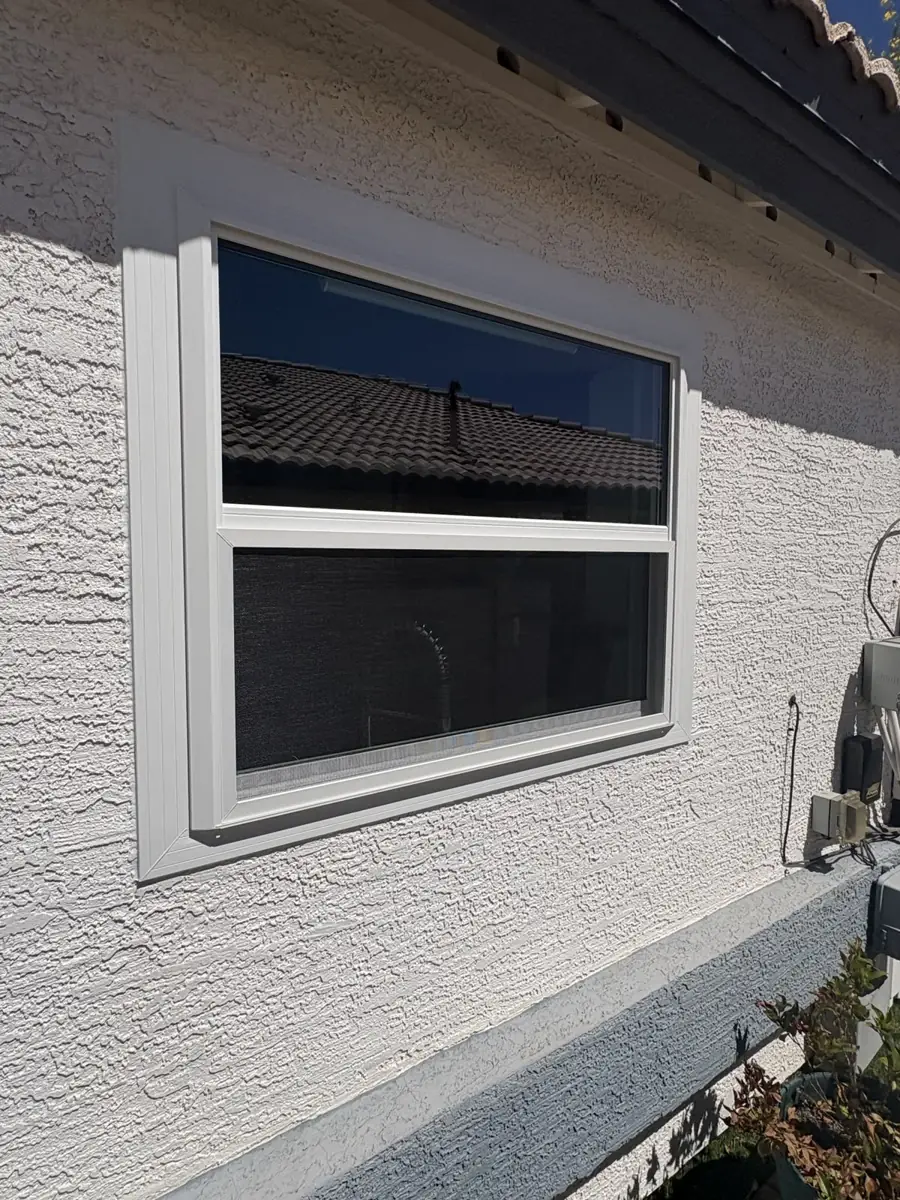
Frame colors, HOAs and what changes outside
From the street, a retrofit window's fin shows as a flat border around the window, sitting on top of the stucco. On a full-frame install the stucco runs right up to the new frame, the way it did when the house was built. Both look clean when the fin or patch is done well, so look at finished jobs before you choose.
Frame color matters more on a stucco house than people expect. Our project photos show white, almond, desert clay, bronze and black frames on Valley homes, and the right one usually picks up the trim or the roof tile color. Darker frames take more heat in the sun, so ask whether the color you like is made for full western sun.
If your home is in an HOA, check its rules before you order. Many cover frame color and grid patterns, and getting the request approved first is easier than explaining a color afterward. Our Glendale window replacement and Mesa pages list more of the Valley communities we work in. When you book a free estimate, ask for both methods priced for your house so you can see the difference.
More questions people ask
Can I keep my aluminum frames and just replace the glass?
You can. HomeGuide puts glass-only replacement at $300 to $650 a window on average. The catch is that the aluminum frame stays, and it keeps carrying heat into the room. Our repair or replace guide covers when new glass is enough.
Will a retrofit window make my window smaller?
A little. The new frame sits inside the old one, so the glass ends up slightly smaller than before. On most windows it's hard to notice, but on a small bathroom window or a bedroom escape window it's worth asking to see the new glass size before you order.
How long does it take to replace one window?
HomeGuide puts a single-hung window under 10 square feet at 30 to 60 minutes. A full-frame install takes longer because of the stucco work, and the patch needs time to cure before it's painted.
Do retrofit windows qualify for the SRP rebate?
The install method doesn't matter to SRP. Its rebate rules are about the window: ENERGY STAR rated, a U-factor of 0.32 or lower, an SHGC of 0.23 or lower, installed by a licensed Arizona contractor before April 30, 2027. New construction homes don't qualify.
About Honest View Windows
Honest View Windows replaces windows and sliding glass doors in homes across the Phoenix area. The company is owned by Scott Harris, and it's licensed and insured in Arizona (ROC 354809). Estimates are free. More about us or call (480) 550-1195.